.png)
Youthline ASB State of the Generation 2026 Report: Listening to Rangatahi
- Tapasā

- Jun 11
- 3 min read
At Tapasā, our work is grounded in a simple belief: the people closest to a challenge are often closest to the solution.
Whether we're supporting youth leadership, strengthening community wellbeing, or creating pathways for Pacific young people to thrive, our role is not to speak for communities — it's to create spaces where communities can speak for themselves.
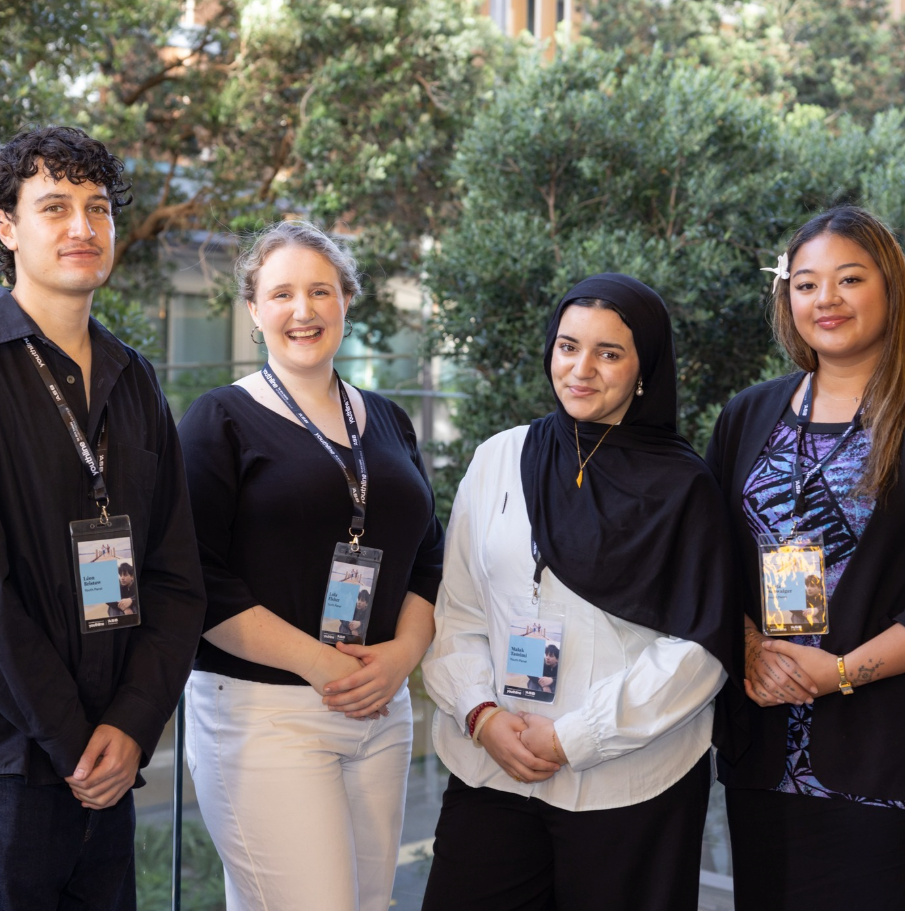
We saw that principle come to life at the launch of the Youthline ASB State of the Generation 2026 Report.
Bringing together the voices of thousands of young people from across Aotearoa, the report offered a powerful insight into the realities facing this generation and created a platform for young people to share those realities directly with leaders, decision-makers, and the wider public.
Our Co-Founder and Creative Director, Kayla Schwalger, was invited to join the youth panel, sharing reflections from her lived experience and community work alongside other young leaders from across the motu. The event was also attended by Minister for Mental Health Matt Doocey, creating an opportunity for decision-makers to hear directly from young people about the realities they are navigating.
While the report covered a wide range of issues, one finding stood above the rest.
Mental health was identified as the number one issue facing young people today.
For us, this wasn't surprising.
Through our work at Tapasā, we regularly hear young people speak about stress, uncertainty, loneliness, and the pressure of trying to navigate an increasingly complex world. But one reflection Kayla shared during the panel particularly resonated with the room:
"Not all young people are mentally unwell. Some are just isolated."
It was a reminder that while access to mental health support remains essential, wellbeing is also shaped by connection.
Connection to culture.
Connection to community.
Connection to purpose.
Connection to people who make us feel seen.
Across our programmes, we've witnessed what happens when those connections are strengthened. Young people become more confident in who they are. They build meaningful relationships. They begin to see futures for themselves that they may not have imagined before.
The report also highlighted another challenge we see consistently across our communities: employment.
More than half of young people identified a lack of job opportunities as one of the most significant issues facing their generation.
As we listened to young people speak about uncertainty around work and their futures, we were reminded that supporting youth wellbeing is about more than responding to crisis. It is also about creating pathways.
Pathways into leadership.
Pathways into employment.
Pathways into decision-making spaces.
Pathways into opportunities that allow young people to contribute their gifts back to their communities.
One of the most memorable moments from the panel was when Kayla shared the Samoan proverb:
"E fofo e le alamea le alamea."
The proverb speaks of the alamea, or Crown-of-Thorns starfish. Spiky on one side and soft on the other, it teaches that the very thing that causes harm can also hold the solution for healing. For us, the proverb reflects a simple but powerful truth: communities often hold the answers to the challenges they face.
If young people are telling us what isn't working, they should help shape what comes next. If communities are experiencing inequities, they should be trusted to help design the solutions.
Leaving the event, we found ourselves reflecting on something that felt bigger than the report itself. Young people are speaking. They are sharing their experiences, their frustrations, their ideas, and their hopes for the future.
The question is no longer whether we know what young people need. The question is whether we are willing to listen — and whether we are willing to share power in creating what comes next.

Fa'afetai lava to Youthline NZ and ASB for bringing these voices together and creating a platform where young people could not only be represented, but genuinely heard.
We look forward to continuing the conversation and, more importantly, continuing the work.


Comments